NLKH Logo

Circular Economy & Waste Management

Growing societal and environmental issues need multidisciplinary, innovative, and entrepreneurial solutions. To address these needs, the NL Knowledge House launched a call for proposals for institutions with expertise in Renewable Energy Transition and Climate Change Mitigation last year. The goal is to connect international minds to accelerate sustainable innovations through a Living Lab: a model of student-centric research projects based on real-life societal and business issues.

After evaluating 36 expressions of interest, a professional jury selected the initiative by What If Lab on Sustainable Public Places for kampung residents in Jakarta to pave the way for the first Living Lab project by the NL Knowledge House Indonesia.

What If Lab: Sustainable Public Places

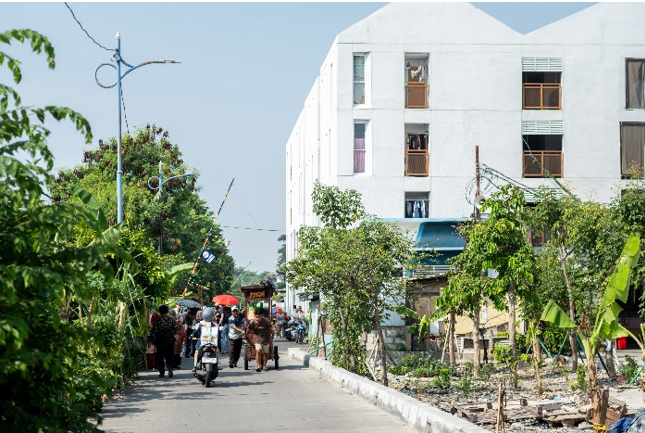
The Living Lab initiative submitted by What If Lab builds upon the successful What If Lab: Sustainable Public Spaces initiative, showcased in the Erasmus Huis Jakarta from February until April, 2024. This earlier project fostered collaboration between Indonesian and Dutch social designers to co-create sustainable public spaces with the residents of Kampung Susun Kunir, Jakarta.

As one of the world’s most densely populated megacities, Jakarta knows little freely accessible public space and faces numerous social challenges regarding climate and responsible use of available materials. The collaboration encouraged designers to explore the meaning of sustainability for kampungs on the frontlines of climate change and develop co-created solutions to mitigate its impacts.

Living Lab: create tangible steps towards a sustainable future with kampungs in Jakarta, Indonesia

Kampung, translated as an urban village, has been understood in a derogatory way for decades as being identified as disorganized and sometimes even labelled as a slum. Despite this, millions of Jakarta’s inhabitants are directly or indirectly tied to the kampungs through work or living, and kampungs will continue to exist in the future. Therefore, it is crucial to demonstrate a sustainable path forward for these communities.

Building on the foundation laid by the designers from What If Lab, the upcoming Living Lab invites students to immerse themselves in Kampung Susun Kunir and its neighboring kampungs. The goal is for students to connect with residents and generate innovative ideas for climate change mitigation and circular economy practices. This initiative aims to benefit the current residents and ensure sustainability for future generations.
Concretising the Case Study and Seeking Collaborations

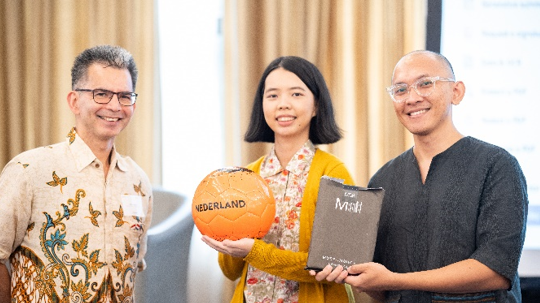
A significant milestone in this journey was the NL Knowledge House work mission held from June 18-20, 2024, which aimed to further concretize the case study and explore collaborations with Indonesian higher education institutions.

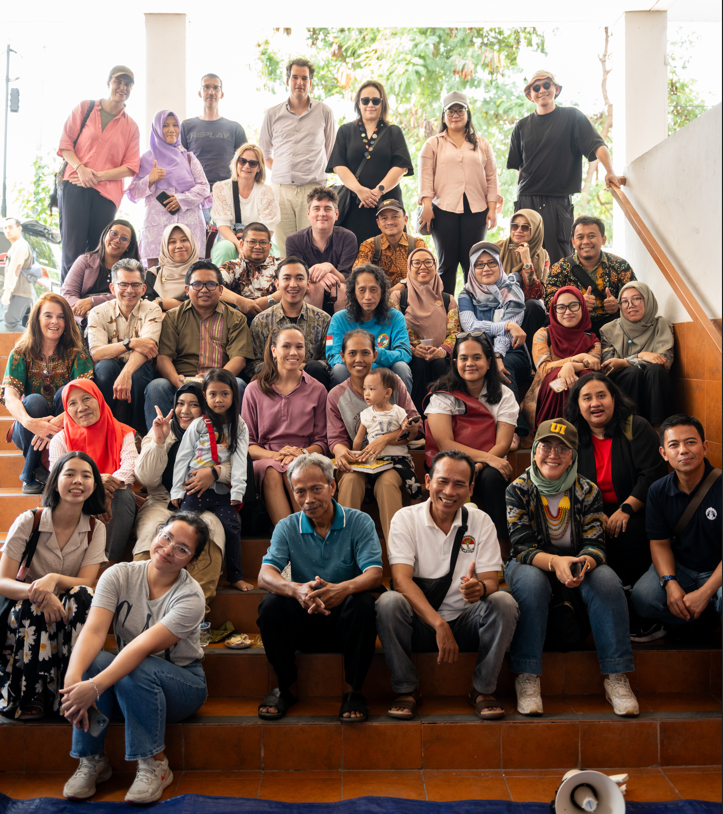
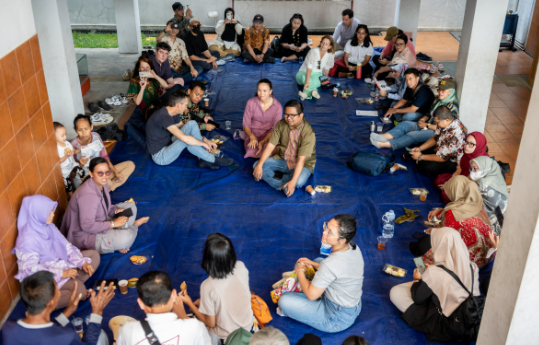
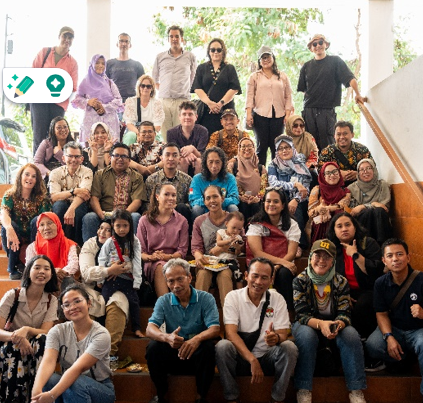
On June 19, the project was officially launched with presentations by Nuffic Southeast Asia, Saxion University of Applied Sciences as the lead partner from the Netherlands, and Dinda Ciptaviana from Kampung Kollektief (succession of What If Lab). The following day, representatives from higher education institutions visited the Kampung Susun Kunir, Jakarta, which will become the research site for Dutch and Indonesian students collaborating in this Living Lab. This visit allowed them to witness the real-world implementation of Kampung Kollektief’s work and identify opportunities for Dutch and Indonesian students to shape a greener and more sustainable neighborhood.
Next Steps

The project has now reached a crucial phase where students and the case owner will meet each other and define the objectives and desired outcomes of their project. The Living Lab is set to officially start in September 2024, marking the beginning of an exciting journey towards sustainable development and climate change resilience in kampungs in Jakarta.
Events

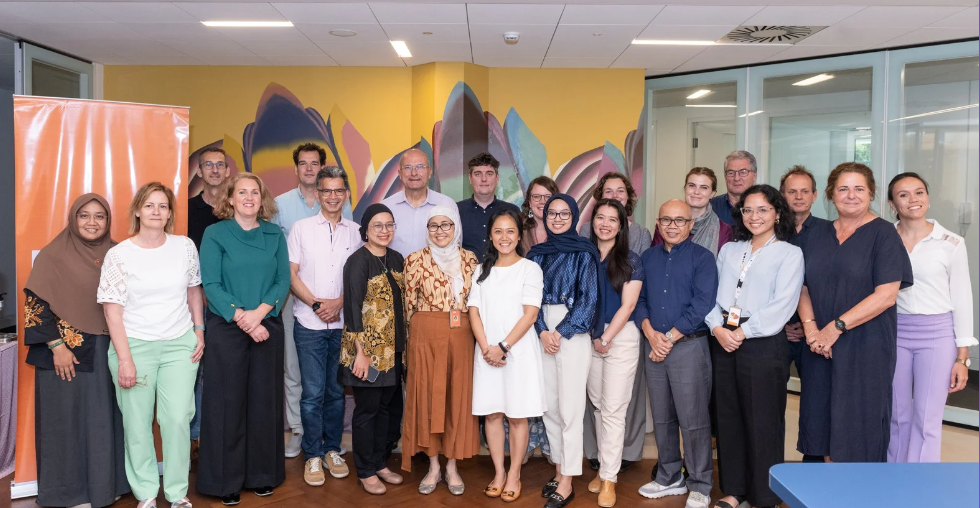
The NL Knowledge House Work Mission took place on 18 – 20 June 2024, in Jakarta Indonesia with a total of 11 participants representing 10 institutions. We are happy to also have Greonpact and Has Green Academy joining the mission with the hope of their interest in joining the network. The Work Mission is one of the many activities of the NL Knowledge House that aims to reflect the continued engagement of the NL KH initiatives to promote partnership between Indonesia and the Netherlands.

The event consists of various activities, including the famous matchmaking event, physical members meeting hosted by Nuffic Southeast Asia and the most anticipated Living Lab site visit developed by the Universities of Applied Science. The first day of the work mission is all about business and the housekeeping of the NL Knowledge House; assisted by the Ministry of Education, Culture and Research (OCW) of the Netherlands Education and Science Attache, Ms Yvonne Klerks welcomed the participants at the Dutch Embassy Indonesia and use this opportunity to explain their roles in the education sectors and willingness of OCW in assisting the NL Knowledge House with their ongoing and even prospective collaboration with the knowledge institutions in Indonesia. It was also through her that the participants were intrigued by BRIN’s research and its permits. Yvonne provided insights on that implementation taken by BRIN and got them curious. The first day also included the KTLV’s Leiden representative Mr Marrik to join the meeting as an example of an organisation model that NL Knowledge House can pursue due to their consortium as Leiden-Delft-Erasmus (LDE). From the 3-partners consortium of LDE, NL KH members were inspired and hope to also create a network with impact and Indonesian partners. Order of business is carried out with the 3rd members meeting of the year, co-chaired by Evi Eliyanah, who is present in the meeting and Mervin Bakker of the University of Groningen in the Netherlands. This was also an opportunity for Mervin to conclude his journey as co-chair of the NL Knowledge House, which will later be represented by Ruard Ganzevoort of the International Institute of Social Studies in Den Haag (part of Erasmus University Rotterdam)

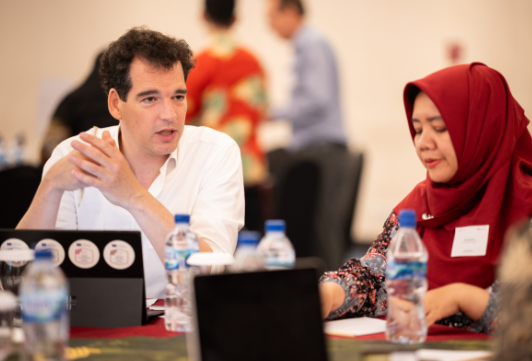
With matchmaking being the main activity of the NL Knowledge House, this event is held at Artotel Gelora Senayan, Jakarta, and participated over 80 Indonesian Universities representatives. These collaborations aim to enhance educational cooperation to identify innovative and sustainable ways to strengthen collaboration in curriculum development, and student and faculty exchange programmes. From the matchmaking, several Indonesian institutions have made new cooperation and now have a better understanding of international cooperation, pursuing stronger partnerships between nations. The matchmaking is followed by a meeting with BRIN on their collaboration scheme for research capacity development as they also promote their 2nd Batch on the BRIN-LPDP ‘National Strategic’ Scholarship Programme. Day 2 is closed with a visit to the Ministry of Research, Technology and Higher Education Indonesia (Kemdikbudristek). This becomes a formal introduction of the NL Knowledge House to the ministry and areas of collaboration.

Day 3 was indeed the most exciting and memorable, with the participants of the NL Knowledge House visiting the one of the many living lab business cases, known as WhatIf Lab: Sustainable Public Spaces. Developed by two universities of applied sciences; The Hague University of Applied Sciences and Saxion University of Applied Sciences at Kampung Susun Kunir, their solutions are surrounding the concept ‘What If We Create Sustainable Public Space in Indonesia?’ Members can discuss their living space and the concept of Ruzak Plaza to further visualise, imagine and create tangible steps towards a sustainable future with Kampungs in Indonesia.

To close the work mission, Adriaan Palm, Chargé D’affaires of the Embassy of the Kingdom of the Netherlands to Indonesia, Timor-Leste, and ASEAN, hosted a networking reception for the Dutch Research Council and ten universities and universities of applied sciences The mission is one of the Dutch Knowledge House’s activities in Indonesia. The work mission aims to demonstrate the success and continued engagement of the Netherlands Knowledge House initiatives, as well as promote partnerships between the Netherlands and Indonesia. During the networking reception, the delegates engaged with the Embassy departments.

Events

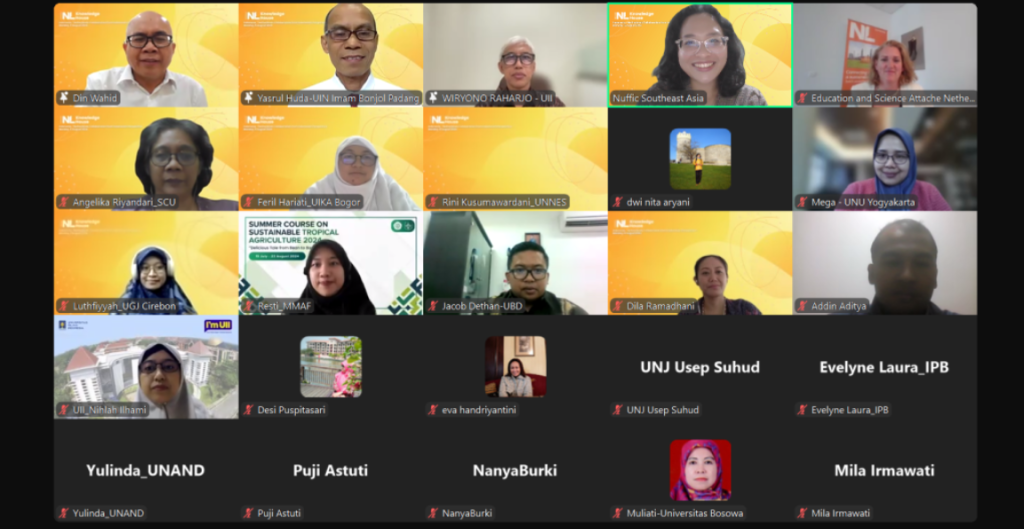
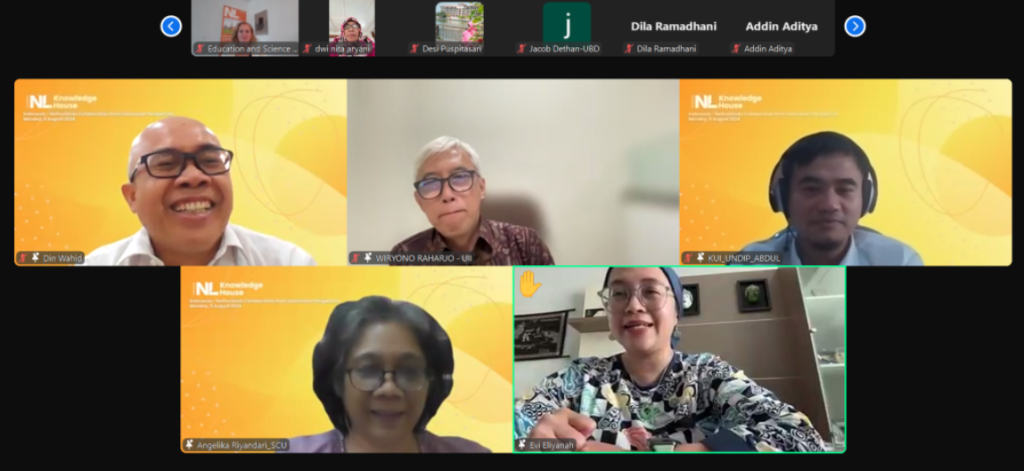
On 6 August 2024, The NL Knowledge House held its first collaboration dialogue of the year, titled Indonesia-Netherlands Collaboration from an Indonesian Perspective. This dialogue brought together representatives from four prominent Indonesian universities—Universitas Negeri Malang (UM), UIN Syarif Hidayatullah Jakarta, Universitas Islam Indonesia, and Universitas Diponegoro—to share their experiences and insights on collaborating with Dutch knowledge institutions. The universities emphasized the importance of building a strong foundation of relationships with Dutch counterparts before addressing the legalities and technicalities of collaboration.

Yvonne Klerks, the Education and Science Attaché of the Kingdom of the Netherlands in Indonesia, welcomed representatives from universities across Indonesia. She highlighted that this collaboration dialogue was initiated following the recent NL Knowledge House Matchmaking event in Indonesia. Klerks also expressed a hope to align the differing objectives between Indonesian and Dutch knowledge institutions to foster more successful and impactful collaborations in the future.

Evi Eliyanah, the Co-Chair of the NL Knowledge House and the Director of the Office of International Affairs at Universitas Negeri Malang, acknowledged that academic collaboration cultures vary between countries. She noted that while some countries prefer robust individual-level cooperation and intensive mobility of students and faculty members before formal agreements are signed, differences in collaboration approaches should not be seen as a hindrance but rather as an opportunity to complement each other’s strengths and develop new strategies for sustainable partnerships. An illustrative example of successful collaboration was shared by Din Wahid, a lecturer from UIN Syarif Hidayatullah Jakarta and an alumnus of two Dutch universities. His academic journey in the Netherlands enabled him to transform his personal network into an institutional one, thereby facilitating smoother collaboration. Universitas Islam Indonesia, represented by Wiryono Raharjo, also emphasized the value of alternative connection methods, such as Erasmus+. Given that the Netherlands is part of the European Union, participating in Erasmus+ programs involving Dutch universities could open doors to the broader European network. Abdul Rohman from Universitas Diponegoro added that universities could build on their histories and past collaborations to expand and deepen partnerships.

The four speakers acknowledged the expectations placed on Indonesian higher education institutions to establish formal, legal cooperation at the institutional level. However, drawing on their extensive experience collaborating with Dutch knowledge institutions, they highlighted the need for more sustainable, bottom-up approaches. These could include initiatives led by alumni, small-scale collaborations such as webinars, information sessions, and research exchanges involving students. Such methods would allow the foundation for collaboration to grow gradually over time.

The dialogue concluded with an interactive Q&A session, where participants discussed the relatable challenges of international partnerships. The insights shared proved valuable to many universities that plan to attend the matchmaking event in the Netherlands during the Week of Indonesia-Netherlands Education and Research (WINNER) Conference from 24–26 September 2024.

To further support matchmaking efforts, the NL Knowledge House will hold a second collaboration dialogue, this time focusing on perspectives from Dutch Knowledge Institutions. Watch the recording of this collaboration dialogue at NL Knowledge House YouTube Channel or click here.

Living Labs

Living Lab Initiatives

A Collaborative Initiative between the Netherlands and Indonesia for Sustainable Energy and Climate Change in Indonesia

The Living Lab is an integral part of the NL Knowledge House initiative, showcasing our dedication to addressing sustainable energy and climate change in Indonesia. By collaborating with the Universities of Applied Sciences, Living Lab brings together citizens, governments, enterprises, and researchers to transform traditional concepts into practical, live solutions.

Living Labs: An Iterative Approach

Unlike traditional research projects, a Living Lab is characterized by an iterative process – solutions and ideas are developed and refined based on feedback and testing in the real-world situation. For a visual representation of this approach, refer to the chart below, which is based on our Living Lab activities at Kampung Susun Kunir.

What Does Living Lab Offer?

  • Emancipated Learning & Global Leadership: Participants can utilize their home university as a base while experiencing international education cooperation, fostering a global perspective.
  • Multidisciplinary Action: Living Lab tackles local issues through a multidisciplinary approach, ensuring comprehensive and effective solutions.
  • New Friendships and Partnerships: The initiative encourages the formation of new connections and collaborations, enriching the experience for all participants.

Benefits for Education Partners

  • Enhanced Reputation and Prestige: By offering students experiences that cater to the growing demand for entrepreneurial education, education partners can boost their reputation and prestige.
  • Global Networking Opportunities: Living Lab provides a platform to expand your global network through collaboration with other institutions involved in the initiative.
  • Interdisciplinary Program Participation: Universities participating in Living Lab contribute to raising awareness about climate change and providing practical solutions tailored to the local context of Indonesia.

Hybrid Global Excellence Collaboration

  • Cultural Familiarity: Living Lab helps Dutch and Indonesian students understand the historical, cultural, and geographical context of Indonesia, particularly the Kampung.
  • Social and Sustainability Concepts: The initiative increases understanding of social and sustainability concepts in both the Netherlands and Indonesia.
  • Engagement Activities: Participants can engage in Digital and Hybrid Knowledge Cafes, eat & meet events, and other activities with the Kampung Community to ensure deeper engagement and understanding of local needs and ambitions.

Benefits for Teachers

  • Professional Development Opportunities: Teachers can enhance their professional growth through various development opportunities.
  • Improved Online Teaching Skills: The initiative helps teachers refine their skills in delivering online education.
  • Co-teaching Skills Development: Teachers learn to co-teach effectively, improving collaboration and teaching outcomes.
  • New Teaching Methods: Living Lab encourages the development of innovative teaching approaches.
  • Learning from Partner Teachers: Teachers can gain new methods and perspectives through collaboration with partner educators.
  • New Research Opportunities: Living Lab provides a fertile ground for exploring new areas of research.
  • Unique Opportunities for Students: Teachers can offer students experiences they wouldn’t otherwise have access to.

Living Lab stands as a beacon of collaborative effort towards a sustainable future. By bridging the gap between traditional concepts and practical solutions, it fosters a multidisciplinary and multicultural approach to addressing some of the most pressing issues of our time. Whether you are a student, educator, or institution, Living Lab offers a unique platform to learn, innovate, and contribute to a sustainable and equitable world.


Our growing partners


Contact Us

For any ideas, collaborations, questions regarding Living Lab one can contact ctroost@nuffic.nl